the revolution will be blow-dried
A month ago, Margot Robbie stepped out at the Chanel runway show at the Grand Palais, ditching her long Wuthering Heights press-tour waves for a blunt bob with choppy bangs. Robbie’s new do debut is not the only dramatic chop to appear recently either – Demi Moore at Milan Fashion Week and Olandria Carthen at Couture Week have all joined the blunt bob resurgence in a matter of months. Not only are we seeing A-listers rocking the jaw grazer, but the bob has also made a comeback online too. You can’t scroll 5 times on social media without seeing someone making their own chin-length announcement.
You may be wondering why a haircut is worthy of cultural dissection - but the bob has always been a barometer of the zeitgeist, and right now, it’s measuring off the charts.
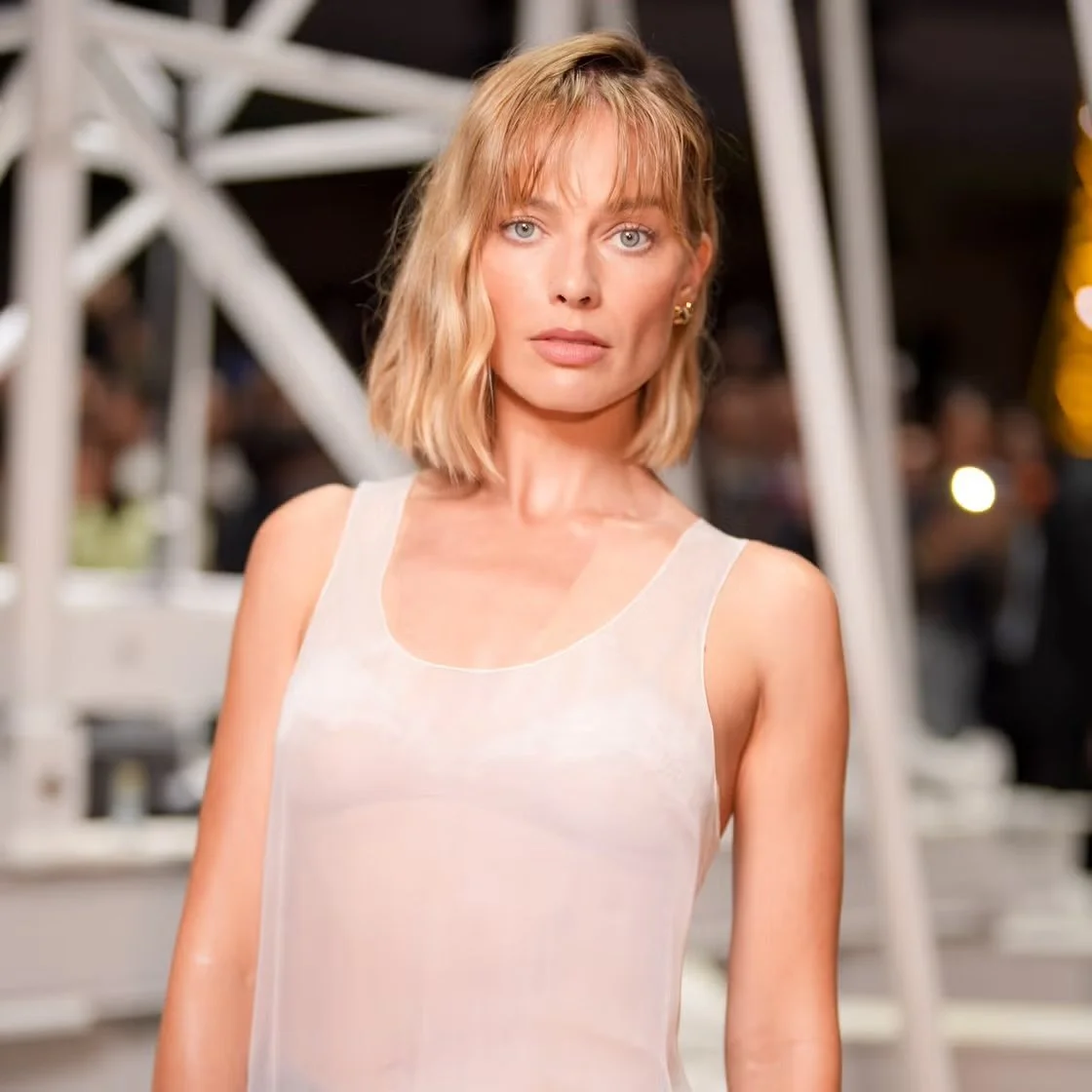
Margot Robbie pictured at Paris Fashion Week 2026 via Red Magazine // Getty Images
The Bob-aissance Is Happening
Admittedly, the bob has been more fashionable in some decades more than others, however, you can’t deny that the hairstyle has stood the test of time. Its chic, it’s versatile and it’s easy to style- qualities that can’t be said for a lot of hairstyles that reach down past the shoulders. The bob has transcended decades from the ever-fashionable, independence-touting flappers of the 1920s to the incredibly chic, geometric Twiggy cut of the 1960s.
The end of 2025 signalled the beginning of the return of the sharp, ultra-polished bob and I think it’s safe to say that it’s here to stay in 2026. Hairstylists have reported an uptick in bob requests and the numbers back them up. Retail data from salon chains across the US and UK show a spike in requests for ‘The Chop’ appointments starting in late 2025. And the curve is only expected to steepen throughout this year. It’s not just a coincidence or a single-celebrity step out - it’s becoming a documented wave across the globe and if we take a look back, it’s clear that this chin-length trend directly mirrors the socio-economic climate of the time. The bob has always reflected politics.
A Brief History of the Bob as Political Act
The bob has never just been a haircut. It has coincided with rapid social and political changes in Western society since the start of the 20th century. All you need to do is look back and you’ll see figures like Joan of Arc sporting the famous cropped do, effectively birthing the idea of the rebellious short-haired woman.
The bob has always challenged traditional views of femininity. Returning to the flappers of the 1920s- these ‘new women’ and their fancy new dos marked a startling visual departure from the upswept and carefully dressed hair of the ever-so popular Gibson Girl of the early twentieth century. The bob was so politically charged in the Roaring 20s that a teacher in Santa Paula, California was fired for cutting her hair into one- a controversy that made national headlines. While the cigarette-smoking, flask-wielding flappers of the 1920s didn’t exactly start the trend, you can’t deny that they popularised the style along with the idea of the haircut as a form of rebellion which has echoed through the last century.
In the 1960s, Vidal Sassoon’s geometric five-point cut, worn by Mary Quant and Twiggy, made the bob a symbol of modernity and the sexual revolution. In the 1980s, the bob became the ‘power bob’ reflecting the growing presence of women in the workforce – oozing professionalism and shoulder length sass. In the 1990s, it came back again fuelled by a bigger feminist movement. Women embraced the bolder style, reflecting their attainment of independence.
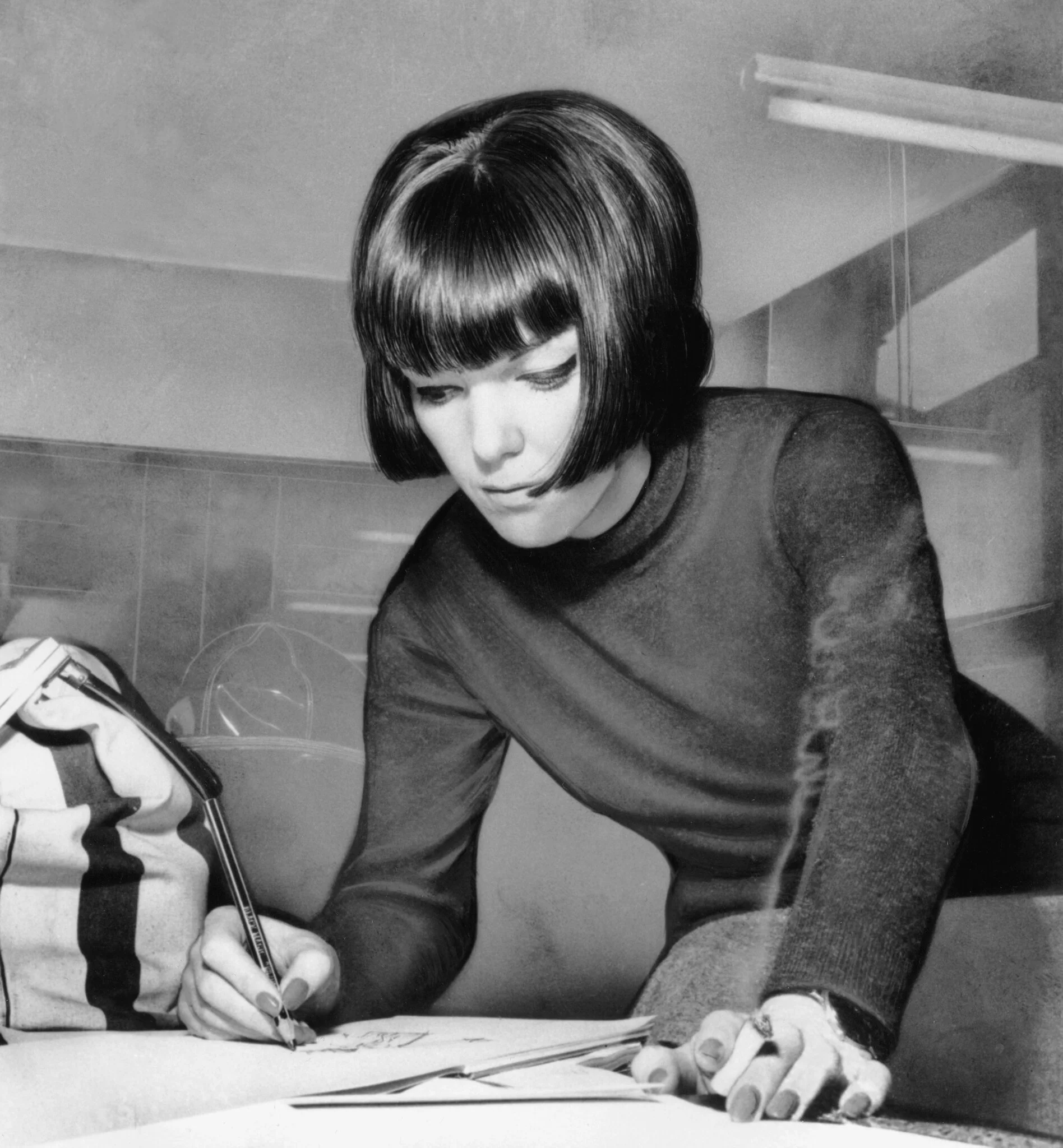
Mary Quant via The New York Times // Associated Press
What Does the Bob Say Right Now?
As it has throughout history- the resurgence of the bob in recent months is more than just a trend resurfacing. It’s a reflection of the current political climate and a socio-economic state of the world.
Given the uncertainty we are facing in the world – an unstable international political environment, war and environmental crisis’, the bob stays constant as a controllable, fuss-free, easy look. It signals the ability to be visibly high maintenance on your own terms. On social media, it’s becoming the uniform of female celebrities in their late 30s, 40s and 50s who are publicly rejecting the idea that they must either chase youth or ‘age gracefully’. Grece Ghanem’s side fringe bob, Sarah Paulson’s jaw length bob, Jane Fonda’s layered bob and Naomi Watts’ middle part bob are all iconic and individual in their own right. In a political environment where women’s bodily autonomy is under pressure, reclaiming control over something like your own hair carries weight.
And we’re all familiar with the breakup bob. The collective catharsis and a long-time advocate of a personal reset. In recent times, along with the infamous fringe, the bob has been a symbol for women going through turbulent periods and has been used as a way of reclaiming independence while entering a new chapter. It’s a universal feeling of taking back control in uncertain times and when we feel this collectively, the trend scales. It can be argued that the return in popularity of the bob is an indicator of the collective turbulence we are all processing in the current climate. Like the flappers of the 20s modernising feminism, the icons of the 60s revolutionising sexuality, the businesswomen of the 80s taking charge in the workforce and the feminists of the 90s reclaiming independence, we too are rebelling against the expectations of women in this modern landscape.
In this modern era of scrutiny, the bob is less a trend and more an assertion of control. There’s a practicality to it, yes, but also a restraint that mirrors the broader cultural mood, where excess is out and intention is in. In choosing the bob, we aren’t just opting for ease or polish, but a subtle recalibration, a desire to be seen clearly, on our own terms, within a landscape that rarely allows for it.
Mainstream fashion media in 2026 is also opting to use phrasing that would have been highly controversial only 2 years ago. The return of the ‘cunty little bob’ not only says a lot about our desire to take control back in our unstable landscape but also describes our own aesthetic in a powerful and defiant way.
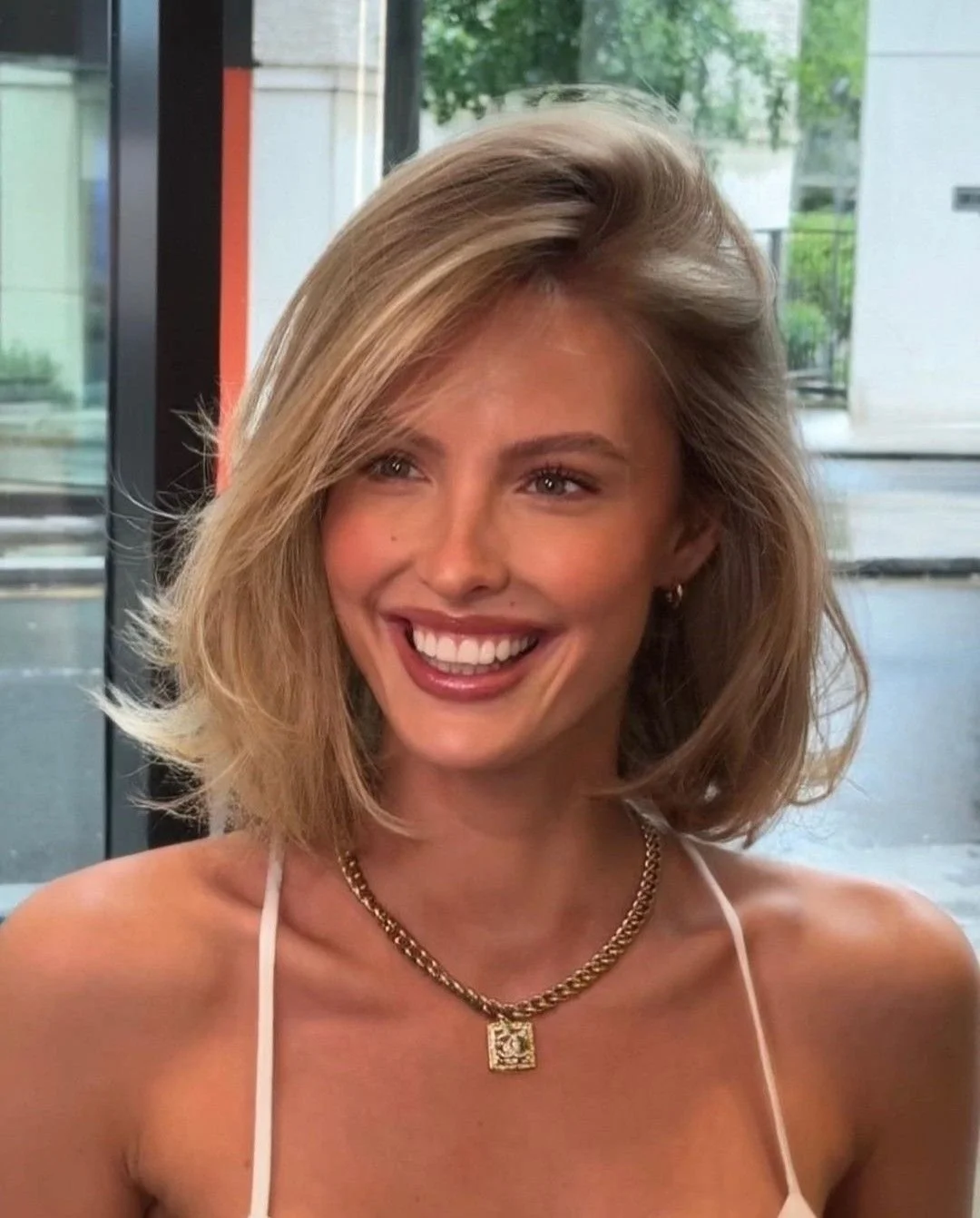
Image via Pinterest // hair.by.suzi
Margot Robbie as the Perfect Symbol
If we revisit Margot Robbie’s ‘cunty little bob’, it now holds far more weight. Robbie spent months wearing her hair in long, tousled waves to embody Catherine Earnshaw for the Wuthering Heights press tour- a character defined by romantic anguish and male obsession. Her decision to bob is a visual full stop on that era. Her new do’s debut at Paris Fashion Week – fashion’s most watched stage – lands a very deliberate declaration of reclaiming control. Sitting front row at Chanel, her hair as Parisian chic and intellectual cool is a post-Barbie/ Wuthering Heights rebirth.
So… Who Gets to Bob?
Today, when we want to embrace change, we rush to cut our hair as a way of breaking from the past. A gesture not dissimilar from that of the flappers of the 20s who defied social convention and freed themselves from oppressive norms. The bob keeps returning because the conditions of the socio-economic climate and political landscape make it necessary. It’s not just a haircut. It’s an empowering weathervane.
When we call the bob ‘empowering’, it invites the question; who is that empowerment available to? And what does it say that the bob- historical- a white western feminist symbol- is once again dominating conversations about women’s liberation?
**for those interested in my source list/ want to verify information from this article, please contact me to receive the full citation list.
