we don’t need feminism anymore
We don’t need feminism anymore, women can go to space now.
They can orbit the Moon, rewrite the limits of human endurance and be a pioneer in their scientific field. What more could we possibly want? And yet, when Christina Koch went to the Moon as part of the highly anticipated Artemis II mission, the online discourse didn’t orbit her achievements for long.
She is the first woman to travel beyond low Earth orbit- the farthest any woman has ever gone from Earth- completing a nearly 10-day journey that took her 252,756 miles from home. Koch holds degrees in electrical engineering and physics, completed remote fieldwork in Antarctica, Greenland, Alaska and Samoa, and built a twofold career in space science and extreme field engineering before NASA selected her to be part of the Artemis II mission. In 2019 she set the record for the longest single spaceflight by a woman, at 328 days. That same year she was part of the first all-female spacewalk.
She didn’t just go to space, she has gone further than any woman in history. I have spent weeks in awe of this woman, her qualifications and her achievements. Then I opened the comment section.
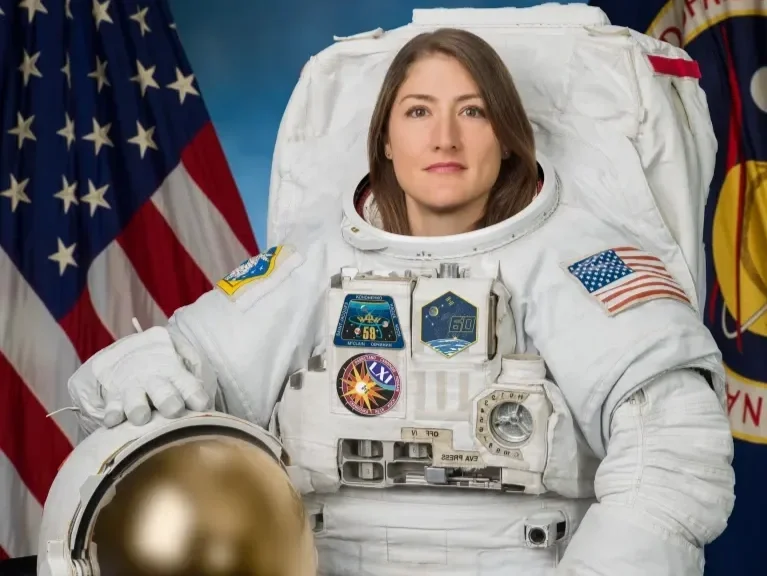
Christina Koch via NASA
It was a barrage of faceless men and insulting, degrading comments.
‘Hopefully the woman is not in control’
‘Women so they don’t get bored in space?’
‘Her husband is still waiting for his sandwich’
‘Woman is going to be the first one to complain in space’
‘Also the farthest from a kitchen’
‘Must we praise everything a woman does? I’m surprised more women don’t have broken arms from patting themselves on the back so hard’
‘Man, she aged out there huh’
Unfortunately this is not the first time, and I’ll bet not the last either, that a qualified, capable woman in the sciences has faced a tirade of verbal abuse online.
In November of 2024 an MIT aeronautical engineer and astronaut Emily Calandrelli became the 100th woman to travel to space. Calandrelli, who also hosts a television show on Netflix called Emily’s Wonder Lab, posted a video describing her awe at seeing Earth from space - as one would in or digital age. Her comment section was flooded with sexist and objectifying remarks, so many that Blue Origin, the aerospace company funding the space flight, was forced to remove the video entirely.
In 2014, cosmonaut Yelena Serova, preparing to be the first Russian woman ever to board the ISS, was asked at her pre-launch press conference how she would do her hair and make-up, and how she would maintain her relationship with her daughter while in space. No such questions were directed at her male colleagues.

Emily Calandrelli via Space for Humanity
The discourse surrounding women in space is a documented, recurring phenomenon that has echoed through decades. It’s not only reserved for armies of online trolls either.
In 1962, when the House of Representatives held public hearings to find out why, NASA cited rules that excluded women. Astronauts, including John Glenn, testified about the cancellation. “It is just a fact,” Glenn testified. “The men go off and fight the wars and fly the airplanes….The fact that women are not in this field is a fact of our social order. It may be undesirable.” Though 13 women were qualified to become astronauts, they never stepped foot on a spacecraft.
Also in 1962, an elementary student named Linda Halpern wrote to NASA asking how she could go to space. Their type-written response read “Your willingness to serve your country as a volunteer is commendable, however, we have no present plans to employ women on space flights because of the degree of scientific and flight training, and the physical characteristics, which are required.”
Linda Halpern was told that space was simply not a place for her. John Glenn said much the same, just with a Senate microphone and the authority of a national hero behind him- it is, he explained, simply a fact of our social order. Six decades later, Christina Koch travelled further from Earth than any woman in history, and was met with comments about sandwiches and kitchens. The language has changed. The letterhead has been replaced by a comment section, the Senate chamber by an anonymous username. But the premise- that a woman in space is something to be questioned and diminished rather than simply witnessed- has proved more durable than any rocket.
The same men who told Christina Koch she should be making sandwiches are very often the same men who will tell you feminism is a relic. We can vote, we can work and we can own our own houses and assets so it’s a solved problem. Obviously. The paradox is not subtle- to tell a woman she belongs in a kitchen in one tab, and in another insist that sexism is a thing of the past, requires a particular kind of selective blindness. The ones declaring feminism unnecessary are, in the same breath, supplying every reason it still is.
Women in male dominated occupations are sexually harassed more than women in balanced or female-dominated ones. Space is the most extreme version of a ‘male domain’ and the reaction to women entering it reflect that twofold. If online comments are the symptom, the structure is the disease. Gender harassment seems to be motivated by hostility towards those who violate outdated gender ideals and a desire to punish women who do not conform to stereotypes prescribed centuries ago.
That punishment is not always hurled from behind a keyboard. Sometimes it is bureaucratic, bloodless, and encoded within the systems themselves.
In 2019, the first all-female spacewalk, which included Christina Koch and Anne McClain, was cancelled because NASA did not have two spacesuits available that fit female astronauts- despite years of preparation and enormous investment. A male astronaut eventually took a McClain’s place place on the mission. This isn’t ancient history. This was only 7 years ago.
While Koch is held up as a symbol, as proof that the ceiling has been broken, it’s worth asking what remains unchanged beneath the surface. A milestone is not a destination, comment sections proof that. Koch's achievement is extraordinary and entirely her own, but the institutions surrounding her, the comment sections, the ill-fitting spacesuits, the press conferences asking women about their hair, have not travelled as far as she has.
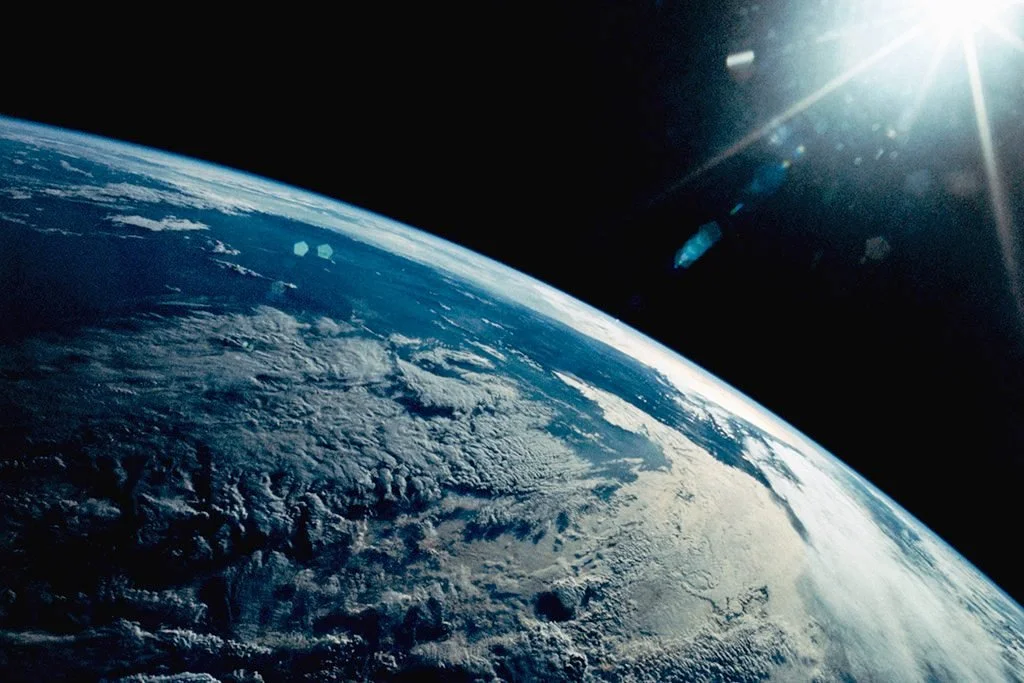
View of Earth from Space via History Extra
Adeene Denton, a critic of NASA's approach to women in space, has argued that "when women are made centerpieces we are often unmade as people”, reduced from complex human beings to convenient narratives. A woman can be a headline and an afterthought at the same time. She can be celebrated on the front page and diminished in the comment section below it, accommodated in the mission statement and forgotten in the equipment room. The applause and the hostility are not opposites. They can, and often do, exist in the same breath.
The comment sections are the ugly, obvious expression of that diminishment. But the spacesuit that didn't fit is another interpretation. The structural version of the same belief, costumed as an oversight, filed as a logistical failure, too mundane to make headlines. If the trolls are the symptom you can see, institutional indifference is the one that’s hiding in plain sight.
From the Orion capsule, Koch said: "Ultimately, we will always choose Earth. We will always choose each other." The men in the comments chose something else. That gap- between who we say we are as a species and what we actually do when a woman achieves something extraordinary- is exactly why feminism is still necessary. So while they all say it isn’t, I tend to disagree.
